
Your couple pattern
You're The Chaser & the Retreater
One of you moves toward the problem. The other moves away from it.
It's 9:40 on a Tuesday night. Something has been sitting between you all day, and one of you finally says, "Can we just talk about it?"
The other one's shoulders go up. Eyes drift to the phone. "Not now. I'm tired."
So one of you pushes a little harder, because silence feels like being shut out. And the other pulls a little further away, because pressure feels like being cornered. By bedtime, you're lying next to each other, both feeling completely alone.
What's really happening
This isn't a communication problem, and it isn't that one of you cares more. ADHD changes how the brain handles stress. For one partner, uncertainty is unbearable, so they move toward it to make it stop. For the other, an overloaded brain needs to shut the input down before it can think at all. You're both trying to feel safe. You're just doing it in opposite directions, and every step one of you takes makes the other take a step back.
Your 3 most common triggers
- Something left hanging. An unfinished conversation, a forgotten promise, a tone that wasn't explained. For the chaser, open loops feel like danger.
- The wrong moment. Hard topics raised late at night, in the car, or when one of you has just walked in the door, exactly when an ADHD brain has the least left to give.
- A shift in tone. A sigh, a short answer, a look at the phone. Small signals get read as "you don't care" or "here we go again."
Try this tonight: the pause with a promise
The next time one of you needs space, say it as a sentence with a time in it: "I need 20 minutes, then I'll come back." And then come back. The retreater gets the space they need. The chaser gets the one thing they're really asking for: proof that you're not leaving.
Take a moment with this question:
If nothing changes, what will these Tuesday nights look like a year from now?
Here's the good news
This is one of the most changeable patterns there is. The moment you can both see it as a pattern, not as proof that your partner doesn't care, the chase loses its power. You stop arguing about who's right and start noticing "Oh, we're doing it again."
Your next step: Adult ADHD Relationship Reset
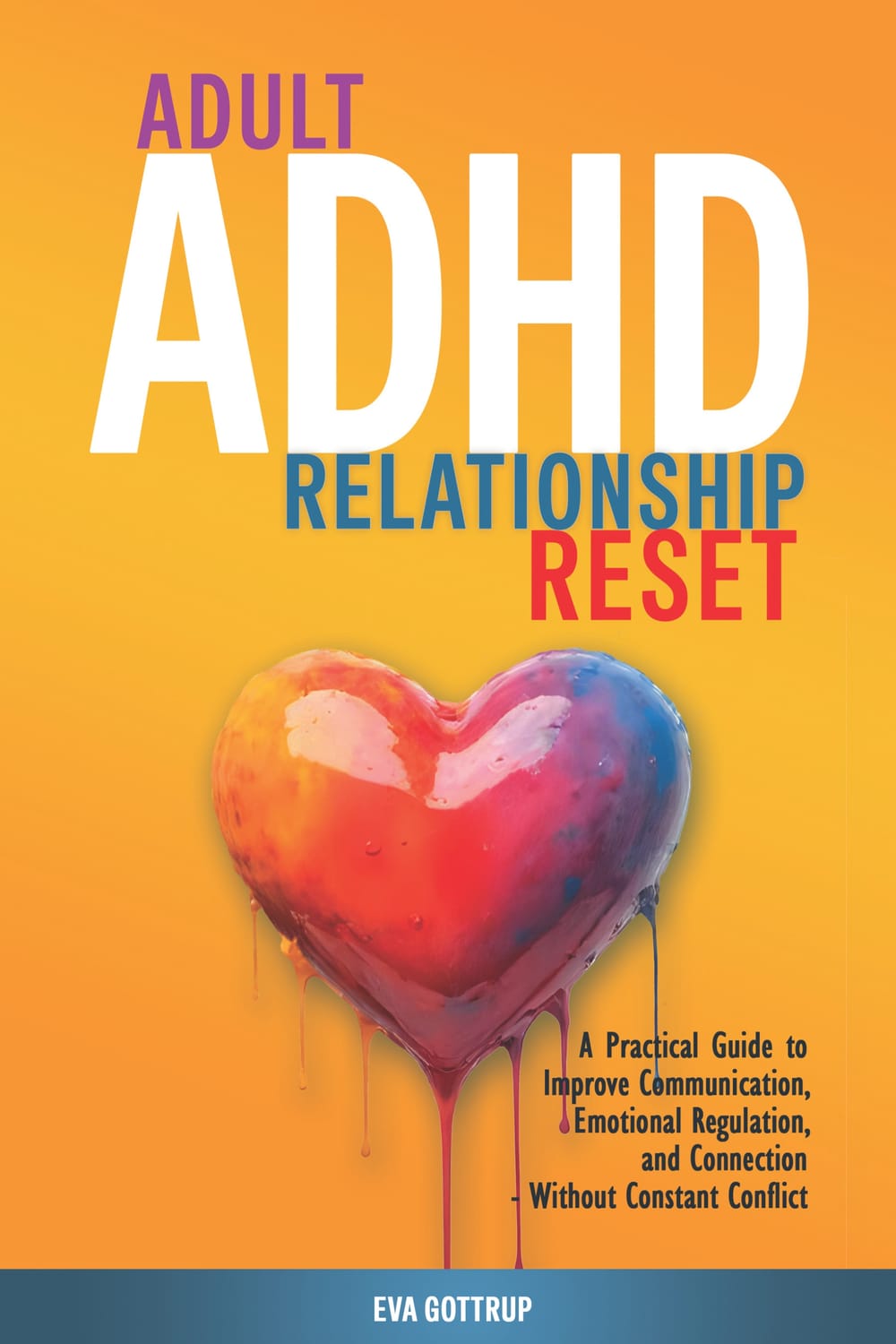
The full book behind this quiz. Chapters 3 and 4 are written for exactly your pattern: how to start hard conversations so nobody has to run, and what to do in the first seconds when one of you starts to pull away. You'll get tools like the Slow-Start Rule, the 5-Word Pause and STOP–DROP–CONNECT, each one small enough to use on an ordinary Tuesday night.
★★★★★ "My partner and I tried a few of the exercises, and they made tough talks easier."
— Mo Farah, verified Amazon review
Get the book on Amazon →P.S. Read chapter 1 together if you can. Many couples say it's the first time they've talked about the pattern without it turning into the pattern.
Warmly,
Eva
This quiz and its results are for reflection and coaching, not therapy, diagnosis or a substitute for professional help. If you ever feel unsafe in your relationship, please reach out to a licensed professional or a local support service.